

Why Is the German Language Exam Important for Nepali Students?
Germany has become one of the most sought-after destinations for Nepali students and job seekers. Whether you are applying to a German university, pursuing vocational training (Ausbildung), or planning to work as a nurse or caregiver in Germany, a recognized German language certificate is your mandatory first step.
German exam certificates — especially those issued by the Goethe-Institut, TestDaF, and ÖSD — are accepted by German embassies, universities, and employers worldwide. Without a valid certificate at the required level, your visa application or university admission simply cannot proceed.
For Nepali students specifically, the A1 and A2 certificates are required for family reunification and Au-pair visas, while B1 and B2 certificates open doors to Studienkolleg, direct university enrollment, and skilled worker visas. This makes investing in proper German exam preparation in Nepal one of the highest-return decisions you can make for your future.
Understanding German Exam Levels: A1 to C2
The Common European Framework of Reference for Languages (CEFR) divides German proficiency into six levels. Each level serves a different purpose for Nepali students preparing to go to Germany.
A1 – Beginner (Anfänger)
The A1 exam tests basic German communication: introducing yourself, asking simple questions, and understanding everyday phrases. This is the minimum requirement for a spouse or family reunification visa. Most language institutes in Nepal cover A1 in 2 to 3 months of regular classes.
A2 – Elementary (Grundlegende Kenntnisse)
At the A2 level, you can handle routine tasks such as shopping, asking for directions, and describing your background. A2 is commonly required for Au-pair visa applications and certain vocational training programs.
B1 – Intermediate (Fortgeschrittene Sprachverwendung)
B1 is the most critical milestone for many Nepali students. It demonstrates that you can handle most situations you would encounter while living in Germany. B1 is required for permanent residency applications and is the entry point for many Studienkolleg programs. Nursing and caregiving programs in Germany often ask for B1 as the minimum.
B2 – Upper Intermediate
B2 proves that you can understand complex texts, engage in detailed discussions, and write clear, structured essays. Many German universities require B2 for direct admission, making it the target level for most Nepali students planning to study in Germany. Medical professionals also need B2 for license recognition.
C1 and C2 – Advanced and Proficiency
C1 and C2 are for those who need near-native fluency. C1 is accepted by almost all German universities for direct enrollment without additional language courses. C2 is rarely required but demonstrates complete mastery of the language.
How to Prepare for the German Exam in Nepal
Effective German exam preparation requires a structured approach, consistent practice, and access to quality learning materials. Here is a proven strategy that has worked for thousands of successful Nepali candidates.
1. Choose the Right Course and Platform
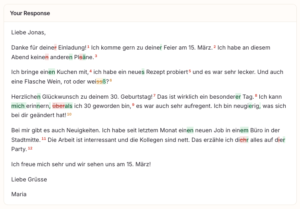
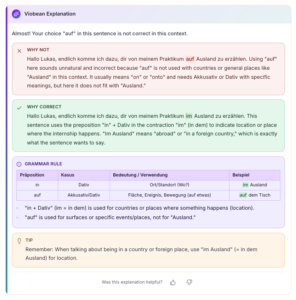
The foundation of your preparation is selecting a course that matches your target exam level. This is where Viobean stands out. As a dedicated German language learning platform, Viobean offers structured courses aligned with Goethe-Institut exam patterns. And through Cheapmandu — Viobean’s official partner in Nepal — you can access these courses at plans designed specifically for Nepali students.
2. Build a Daily Study Routine
Consistency beats intensity. Studying 1 to 2 hours every day produces far better results than cramming for 8 hours on weekends. Use Viobean’s structured modules to maintain steady daily progress through grammar, vocabulary, listening, and speaking exercises.
3. Focus on All Four Skills
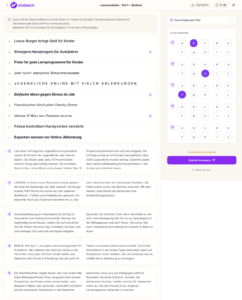
German exams test four distinct skills: Lesen (Reading), Hören (Listening), Schreiben (Writing), and Sprechen (Speaking). Many students in Nepal focus too heavily on grammar and neglect listening and speaking practice. Viobean’s courses include all four components to ensure balanced preparation.
4. Practice with Mock Exams
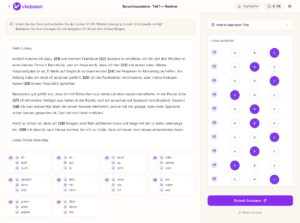
Taking full-length practice tests under timed conditions is one of the most effective ways to prepare. This builds familiarity with the exam format, improves time management, and reveals weak areas that need extra attention.
5. Immerse Yourself in German
Supplement your coursework by watching German news (Deutsche Welle is freely accessible), listening to German podcasts, and reading simple German texts. Even changing your phone’s language to German can help build passive vocabulary over time.
Cheapmandu × Viobean: Your Affordable Path to German Certification
Cheapmandu is the official partner of Viobean in Nepal. This partnership was established to make high-quality German exam preparation accessible and affordable for Nepali students, regardless of their location within the country.
Viobean provides a comprehensive online learning platform with structured German courses, interactive exercises, mock tests, and progress tracking — everything you need to pass your German exam. Through Cheapmandu, you can subscribe to Viobean’s plans at prices tailored for the Nepali market.
Viobean Plans Available Through Cheapmandu
Choose the plan that fits your timeline, budget, and exam goals. All plans include full access to Viobean’s German learning platform with structured lessons, practice exercises, and exam preparation resources.
| Plan | Duration | Price (NPR) | Best For |
|---|---|---|---|
| Viobean Pro | 1 Month | Rs. 2500 | Quick revision before exams or trying out the platform |
| Viobean Pro Max | 1 Month | Rs. 5500 | Intensive – 1 Month preparation with premium features |
| Viobean Pro Best Value | 1 Year | Rs. 25000 | Long-term learners preparing for A1 to B1 progressively |
| Viobean Pro Max Most Popular | 1 Year | Rs. 40000 | Complete preparation from beginner to advanced with all premium features |
The 1 Year Accesss offer significant savings compared to 1 Month Accesss. For example, the Viobean Pro 1 Year Access costs Rs. 22,000 — that is just Rs. 1,833 – 1 Month, saving you over Rs. 12,000 compared to paying – 1 Month throughout the year.
Start Your German Exam Preparation Today
Join thousands of Nepali students who are already preparing for their German exams with Viobean through Cheapmandu.
Where to Take the German Exam in Nepal
After completing your preparation, you will need to register for the official exam. In Nepal, the primary exam centers include the Goethe-Zentrum Kathmandu (the official Goethe-Institut partner), which conducts Goethe-Zertifikat exams from A1 through C2. Several other authorized test centers in Kathmandu and Pokhara also offer ÖSD exams.
Registration typically opens a few weeks before each exam date, and seats fill quickly. It is wise to register early — especially for the popular A1 and B1 exam dates. Exam fees vary by level and typically range from Rs. 8,000 to Rs. 18,000 depending on the level and the testing center.
Your preparation through Viobean courses (via Cheapmandu) aligns with the Goethe-Institut exam format, which means you will be practicing with the same question types, timing, and scoring criteria you will encounter on exam day.
Expert Tips for Passing the German Exam on Your First Attempt
- Start preparation at least 3 months before your target exam date for A1/A2, and 4 to 6 months for B1/B2
- Use Viobean’s structured daily lessons to build consistent study habits
- Practice speaking with a partner or tutor — the speaking module catches many students off guard
- Learn exam-specific vocabulary and phrases (Redemittel) for the writing and speaking sections
- Take at least 3 full mock exams under timed conditions before your real exam
- Pay attention to the Hören (listening) section — practice with native-speed audio daily
- Review your mistakes systematically rather than just moving to new material
- Get adequate rest the night before the exam — fatigue is your enemy during a 3-hour test
What Can You Do With a German Exam Certificate From Nepal?
A recognized German exam certificate opens multiple pathways for Nepali citizens. With an A1 certificate, you can apply for family reunification visas and demonstrate basic language ability. An A2 certificate qualifies you for Au-pair programs and certain vocational training tracks.
The B1 certificate is the most versatile — it is required for permanent residency applications, nursing and caregiving programs, and several Studienkolleg programs. A B2 or higher certificate enables direct university admission across most German universities, professional license recognition for doctors and engineers, and access to skilled worker visa categories under Germany’s updated immigration laws.
Each of these opportunities can be life-changing. The small investment in German exam preparation through Cheapmandu and Viobean is minimal compared to the educational and career returns that a German certificate can unlock.
Frequently Asked Questions
Where can I prepare for the German exam in Nepal?
You can prepare online through Viobean, accessible via Cheapmandu, Viobean’s official partner in Nepal. This gives you access to structured German courses from anywhere in the country — Kathmandu, Pokhara, Chitwan, or any other location with internet access.
How much does German exam preparation cost in Nepal?
Through Cheapmandu, Viobean plans start at Rs. 2,900 – 1 Month (Pro plan). The best value is the – 1 Year Pro plan at Rs. 22,000, which works out to just Rs. 1,833 – 1 Month. Premium Pro Max plans are also available for students who want advanced features.
Which German exam certificates are recognized for visa and university admission?
Goethe-Institut certificates (Goethe-Zertifikat A1 through C2), TestDaF, and ÖSD certificates are internationally recognized and accepted by German embassies, universities, and employers. Viobean’s courses are aligned with the Goethe-Institut exam format.
Can I prepare for the German exam online from Nepal?
Yes. Viobean provides a fully online German preparation platform. Through Cheapmandu, you can enroll, pay in Nepali Rupees, and access all course materials online. This is especially valuable for students outside Kathmandu who may not have access to physical language institutes.
How long does it take to prepare for the A1 German exam?
With consistent daily study of 1 to 2 hours, most students can prepare for the A1 exam in 2 to 3 months. With Viobean’s structured course and daily modules, this timeline is achievable even for complete beginners.
What is the difference between Viobean Pro and Pro Max?
Viobean Pro provides access to the core German learning modules, exercises, and practice tests. Viobean Pro Max includes additional premium features for a more comprehensive preparation experience. Both plans are available in – 1 Month and – 1 Year options through Cheapmandu.






Reviews
There are no reviews yet.